Gastric ulcers are one of the most common health problems in performance horses. Depending on the discipline and management, studies suggest that 50-90% of horses will have some degree of gastric ulceration at some point in their lives. Racehorses and high level performance horses are at the highest risk.
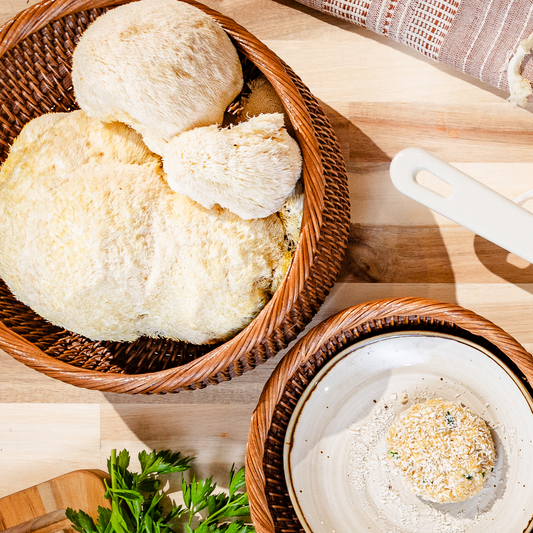
Ulcers are usually managed with prescription medications such as omeprazole and with careful changes to diet and management. At the same time, there is growing interest in ingredients that might support the health of the stomach lining itself. One of those ingredients is Lion’s Mane mushroom (Hericium erinaceus).
There are no ulcer trials in horses with Lion’s Mane yet. However, several well designed animal studies suggest that Lion’s Mane can protect the stomach lining in rats and mice. Here are two of the most interesting ones and how they might relate to equine gastric health.
Study 1: Whole Lion’s Mane extract reduced ulcer area in rats
A 2013 paper titled “Gastroprotective effects of Lion’s Mane Mushroom extract against ethanol induced ulcer in rats” looked at how an aqueous extract of Hericium erinaceus affected stomach ulcers in Sprague Dawley rats.
Researchers used a standard model where rats are given ethanol to create acute gastric ulcers. Before the ethanol, different groups of rats received:
-
Distilled water
-
Omeprazole (as a reference drug)
-
Lion’s Mane extract at increasing doses
When the stomachs were examined, the rats that received Lion’s Mane had:
-
Significantly smaller ulcer areas, in a clear dose dependent pattern
-
Thicker, more intact mucus on the stomach lining
-
Healthier looking tissue under the microscope, with less bleeding and inflammation
The highest dose of Lion’s Mane performed in a similar range to omeprazole in terms of reducing ulcer size, and the extract showed strong antioxidant effects by supporting enzymes such as superoxide dismutase and catalase.
In simple terms, feeding Lion’s Mane extract before the ulcer insult gave the rats a more resilient stomach lining and reduced the damage that followed.
Study 2: Lion’s Mane polysaccharides and deeper ulcer protection
A 2018 study titled “Gastroprotective activity of polysaccharide from Hericium erinaceus against ethanol induced gastric mucosal lesion and pylorus ligation induced gastric ulcer” focused on a purified polysaccharide fractionfrom Lion’s Mane.
This team used two different ulcer models in rats:
-
Ethanol induced acute lesions
-
Pylorus ligation, which increases acid and digestive secretions
Rats that received the Lion’s Mane polysaccharide before these procedures showed:
-
A clear reduction in ulcer severity and area compared with untreated controls
-
Improved antioxidant status, with better radical scavenging and metal chelating activity
-
Less lipid peroxidation, which means less oxidative damage to the stomach tissue
The authors concluded that the Lion’s Mane polysaccharide provided meaningful gastroprotection and that these complex sugars are likely one of the main active components responsible for the mushroom’s anti ulcer effects.
How could this relate to horses?
Horses are not rats, and equine gastric ulcer syndrome is more complex than a single ethanol insult. However, the basic protective strategies of the stomach lining are shared across mammals. These include:
-
A strong mucus barrier
-
Adequate blood flow to the stomach wall
-
Antioxidant systems that protect cells from acid and oxidative stress
The studies above suggest that Lion’s Mane can:
-
Help preserve or increase gastric mucus
-
Reduce visible ulcer damage when an insult occurs
-
Support antioxidant defenses in the stomach tissue
For horses, especially performance horses that are exposed to stress, travel, grain, and intermittent feeding, any ingredient that supports the natural defenses of the gastric lining is scientifically interesting. A recent review of Lion’s Mane’s effects on the digestive system points out that these gastroprotective actions are consistently seen in multiple preclinical models.
This does not mean that Lion’s Mane has been proven to prevent or heal ulcers in horses. It does suggest that Lion’s Mane is “stomach friendly” in preclinical studies and that its traditional use for gastric complaints has a growing scientific basis.
Ulcers in horses are serious and require proper diagnosis and medical treatment under the guidance of a veterinarian. Acid suppression, diet adjustments, turnout, and stress reduction are still the core tools for managing equine gastric ulcer syndrome.
Lion’s Mane should be viewed, at this stage, as a supportive ingredient, not as an ulcer drug for horses.
Cordyceps and Tissue Repair: What the Science Suggests for Equine Wellness

Why The Power of Full Spectrum Sets a New Standard